
Elephants Speak in Vibration
“Purring” as Long Distance Communication, Emotional Regulation, and Social Memory

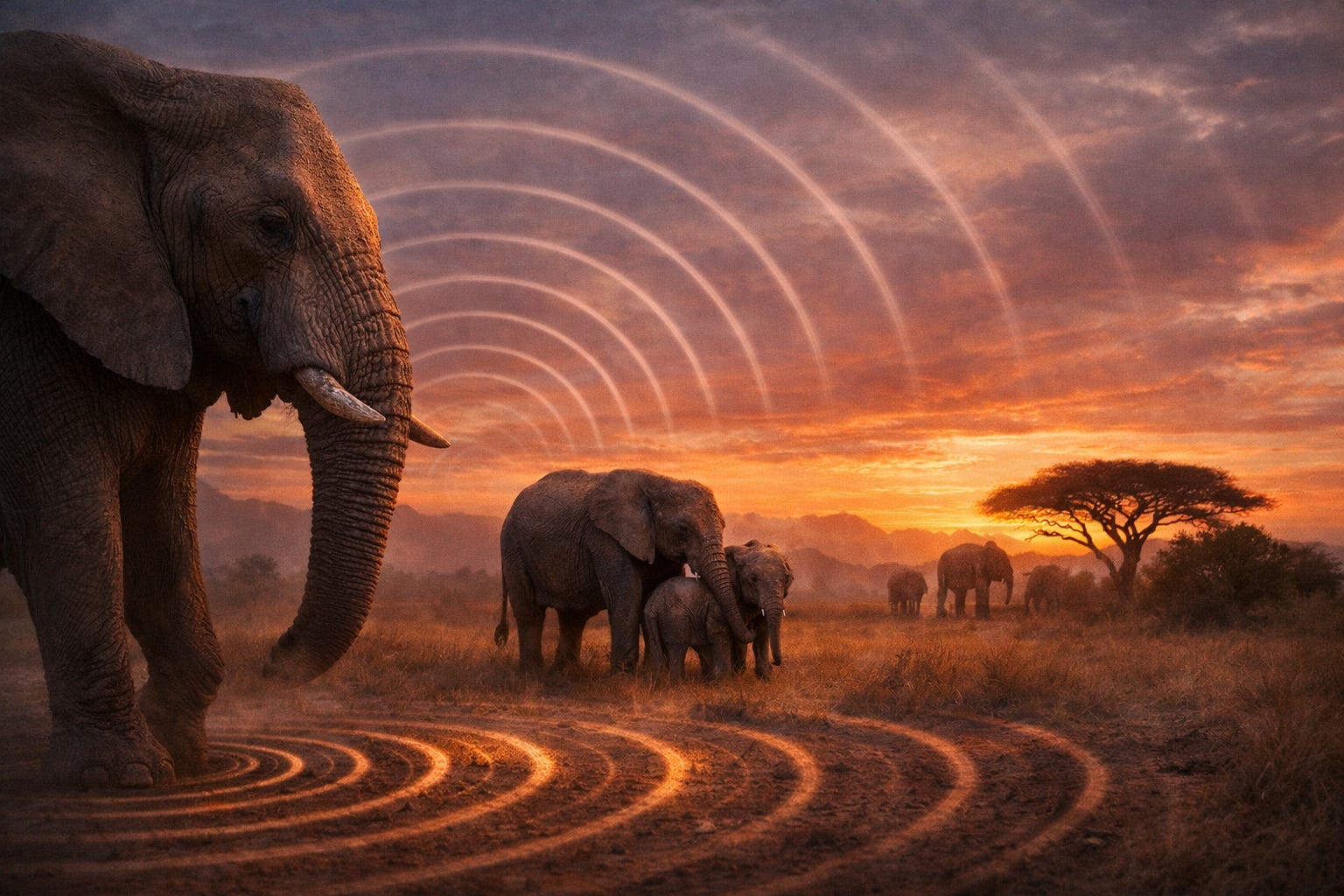
For a long time elephants were misunderstood as quiet unless they were trumpeting. Early observers assumed that if nothing obvious reached the ear then nothing meaningful was happening. That assumption lasted for decades and it obscured one of the most complex communication systems in the animal world. The shift began in the nineteen seventies when biologist Katy Payne noticed something that did not fit that story.
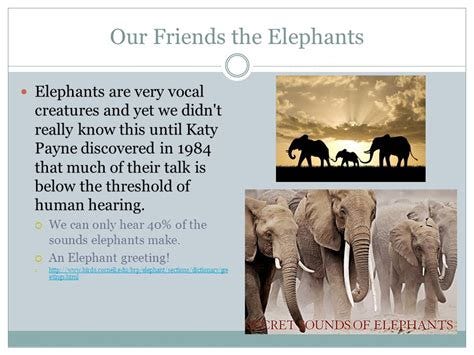

Objects rattled when elephants were nearby. Her chest felt pressure. The air felt thick even when the animals stood still. Once recording equipment was adjusted to capture very low frequencies it became clear that elephants were constantly producing sound that often humans were simply not built to notice.
These sounds were not brief calls. They were sustained rumbles produced by rhythmic vibration of the larynx while airflow remained steady. Researchers listening to slowed recordings kept reaching for the same word. “Purr”. It was a steady, low vibration that seemed to move through the air and ground without effort, gentle but persistent.
Elephants produce these “purring” rumbles during nursing resting slow movement reunions and periods of collective stillness. Mothers produce them toward calves. Groups overlap them while standing together doing nothing in particular. Individuals produce them before approaching others. This is not incidental noise. It is structure. Some of these “purrs” are infrasound, below 20 hertz, which humans cannot hear.
These low “purrs” travel for miles, through air and especially through the ground, allowing elephants to communicate long distance, coordinate migration, and maintain herd cohesion.
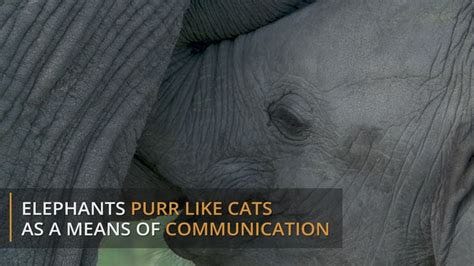
Other “purrs” are higher in frequency, within or just above human hearing range. These can be perceived by humans standing nearby and often accompany close-range bonding or social regulation, producing a rhythmic, calming effect similar to a cat’s purr.
What makes this even more striking is how far these “purrs” travel. Elephant rumbles can carry for miles depending on terrain temperature and ground conditions. They move through air but they also move through soil. Elephants detect vibration through specialized cells in their feet and trunks. This means an elephant can feel a message long before hearing it.

These “purrs” are not all the same. Some communicate identity. Some signal intention. These “purrs” show up when an elephant is elated states. Some announce presence without aggression. Elephants can distinguish between familiar and unfamiliar callers and they retain those acoustic signatures for years. A single low rumble can tell another elephant who is nearby whether it is family ally or potential rival. This allows herds to coordinate across distance without chaos. Groups spread across large areas can adjust movement gradually. They converge. They avoid. They wait. Migration remains fluid rather than frantic. The landscape becomes mapped by sound. Even boundary setting happens this way. When rival groups are nearby elephants do not immediately escalate. They often exchange long low “purrs” that establish position and intent. The message is clear but contained. This space is occupied.

Researchers also noticed that elephants respond differently depending on who is calling. A matriarch’s “purr” carries authority. A distressed calf triggers immediate response. Emotional state rank and relationship are encoded in vibration alone. Elephants are not just producing sound. They are communicating.
During periods of stress loss or disruption elephants gather and produce overlapping low frequency “purring” for extended periods. These moments are organized and slow. The sound does not spike. It settles. This matters because elephants are large long lived emotionally complex animals with deep social memory. A species like that cannot function without mechanisms that maintain cohesion. Their “purrs” operate like a shared baseline that keeps the group oriented. Even during rest these sounds continue. Herds lying or standing close together maintain low “purring” as if holding a communal signal that nothing urgent is happening.
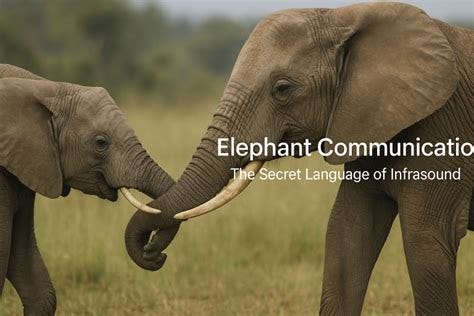
Katy Payne expanded this work into the Elephant Listening Project, using ground sensors and microphones to map elephant “purring” across entire habitats. Her team documented how herds communicate over miles, how low-frequency “purrs” travel farther than any visible signal, and how these sounds help maintain the structure and emotional balance of elephant societies. The project revealed that elephants maintain social cohesion not through noise or spectacle but through subtle, persistent vibration.
People who work closely with elephants often describe feeling grounded or calm without knowing why. Low frequency vibration interacts with mammalian nervous systems whether or not it registers consciously. Humans respond to rhythm and repetition instinctively. Elephants evolved a system that uses those same principles across far larger bodies and landscapes.
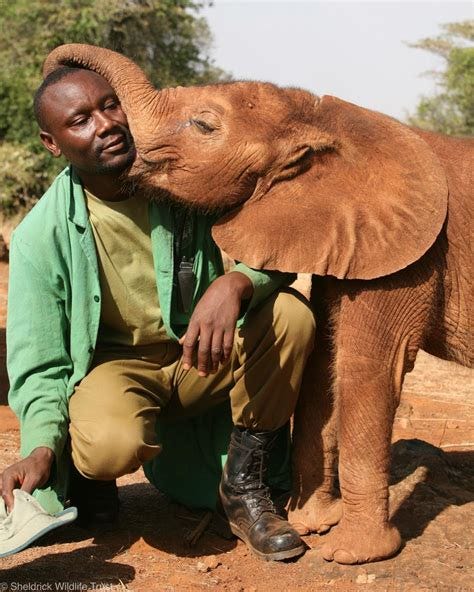
Elephants also use this system to sense the environment itself. Vibrations from distant thunderstorms, flowing water, or seasonal rains travel through the ground, and elephants can detect them through their feet and trunks.
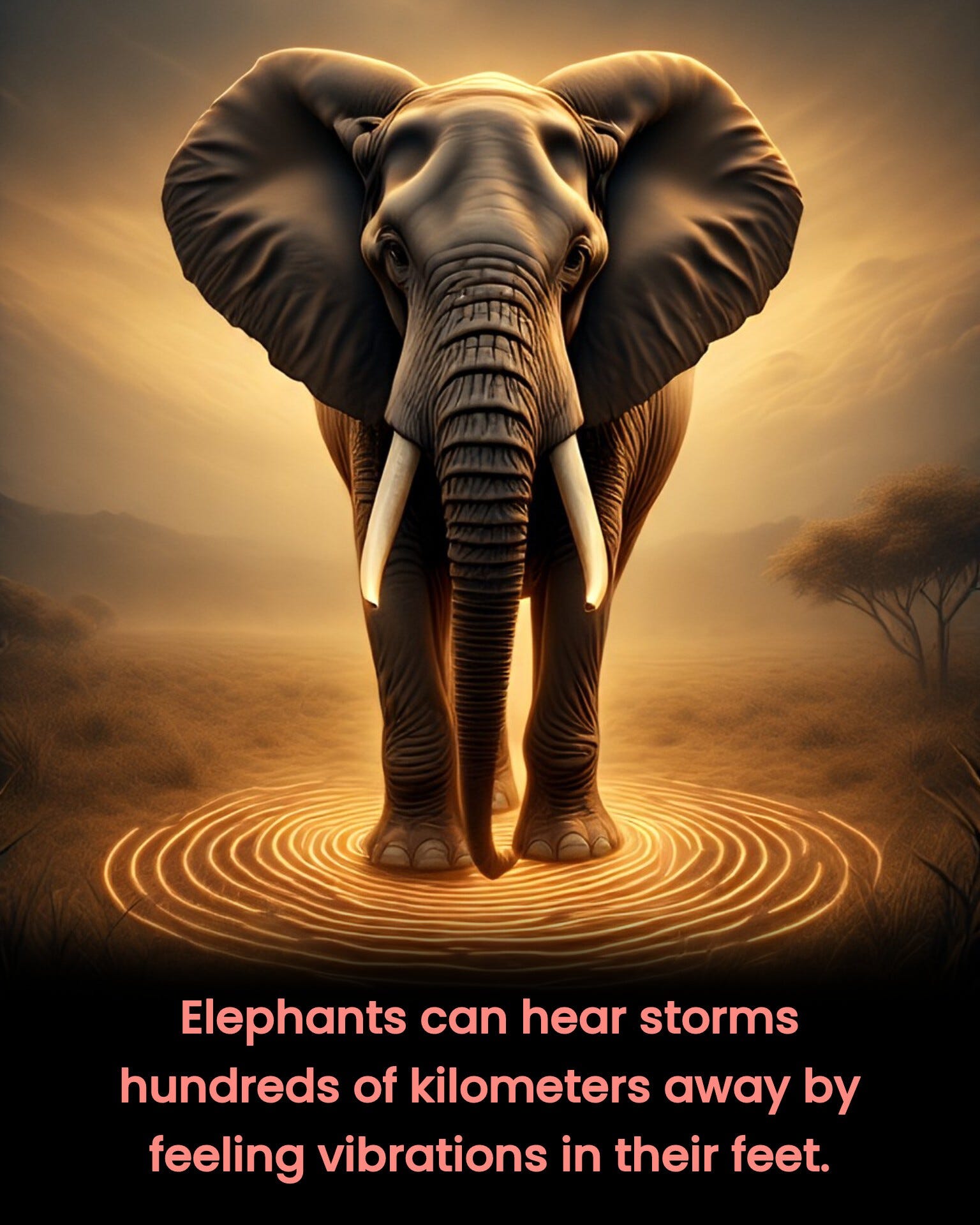
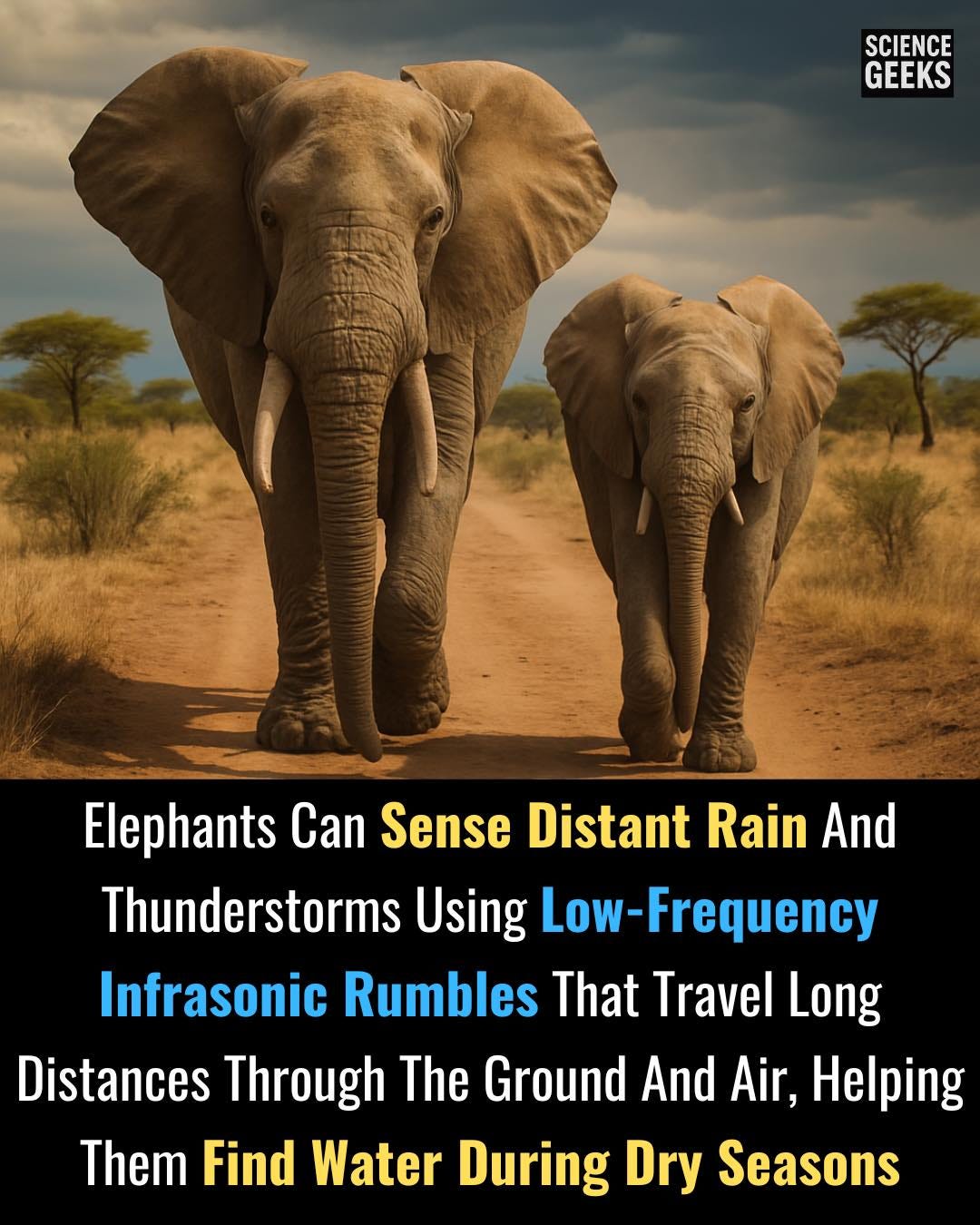
By combining environmental vibrations with social “purrs,” herds can locate waterholes, anticipate seasonal rains, and make migration decisions long before humans would notice changes in the landscape.
Elephants are also known to detect large scale geophysical events long before humans do. During the 2004 Indian Ocean tsunami, multiple reports documented elephants in Thailand and Indonesia becoming agitated hours before the wave hit, breaking restraints and moving inland to higher ground, in several cases carrying or guiding tourists with them. The likely mechanism was not sound in the human range but low frequency ground vibrations and pressure changes traveling through the earth and water. Elephants are exquisitely sensitive to infrasound and seismic signals through their feet, trunks, and skeletal structure. What reads to us as intuition or panic is better understood as early access to information that our nervous systems simply cannot register. (Thank you to Ibellis55 for telling me about this!!!!)
Understanding elephant “purring” changed how conservationists think about habitat noise and captivity. When soundscapes are disrupted communication breaks down. Stress rises. Social coordination weakens. When ground vibration is blocked essential information never arrives. Once this system is understood elephants stop looking like loud animals that occasionally communicate. They appear instead as highly regulated social organisms using sound as infrastructure. Their “purrs” organize movement maintain relationships and prevent unnecessary conflict across large distances.

Cats “purr” at close range. Elephants use similar mechanics at a much larger scale. Both rely on continuous low frequency vibration rather than sharp signals because it stabilizes rather than disrupts. What sounds like quiet to us is often dense with information. In the case of elephants the most important communication rarely announces itself. It moves through ground and bodies doing its work without much spectacle.
Fascinating! Thank you
What beautiful and intelligent creatures. Thank you very much! That explains why the animals retreated to the high ground before the devastating tsunami in Indonesia hit.