
Lucifer’s List
Who Really Gets Points for the Light???

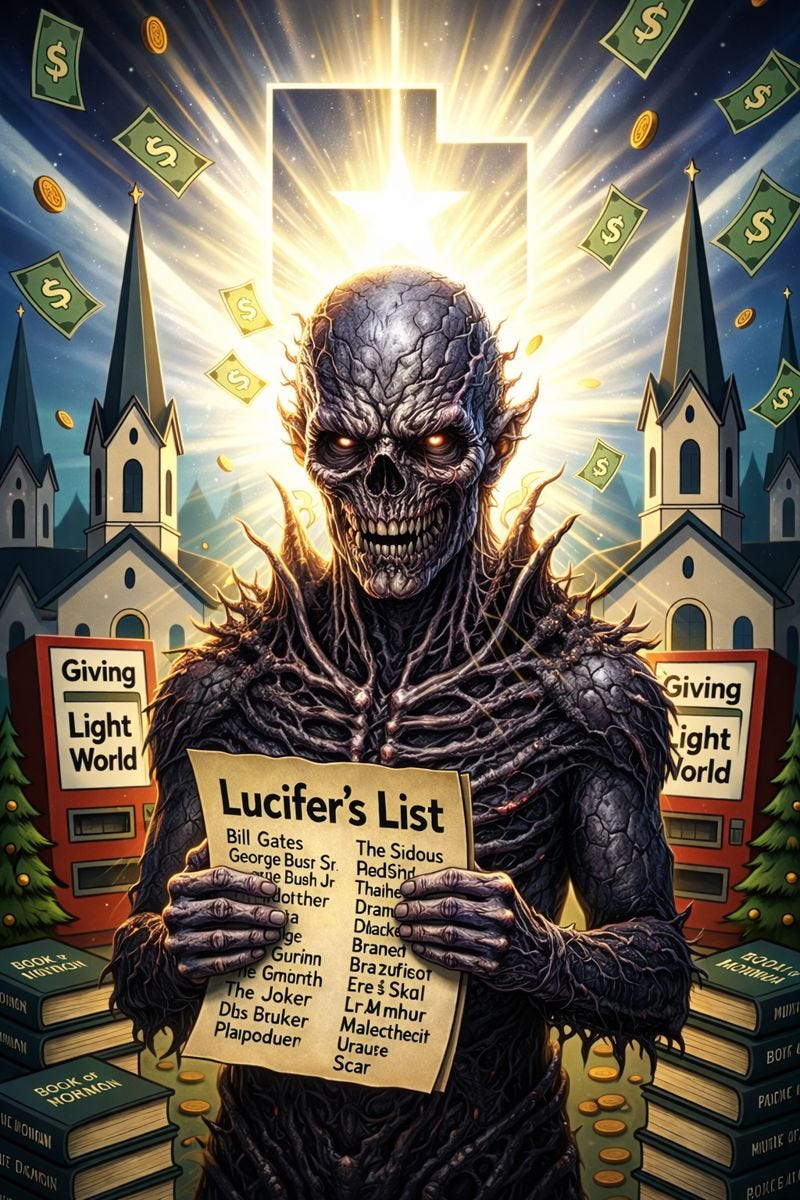
It was freezing outside, so I went to the mall to walk. Not to browse, not to shop, not to people watch. Just to get my steps in without battling the cold. Simple. Practical.

Which is probably why what I walked into felt so absurd. Right in the middle of the mall was this oversized display of philanthropic vomit inducing sussness with glowing installation that looked completely out of place (and were totally in my way). Bright red machines. Rope barriers. Volunteers stationed like docents at a museum exhibit.
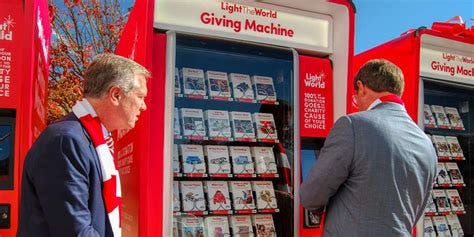
Soft music floating through the air. A crowd moving slowly and obediently through a very specific path. The whole thing announced itself as something important that you were supposed to notice. It was called the Light the World Giving Machines.
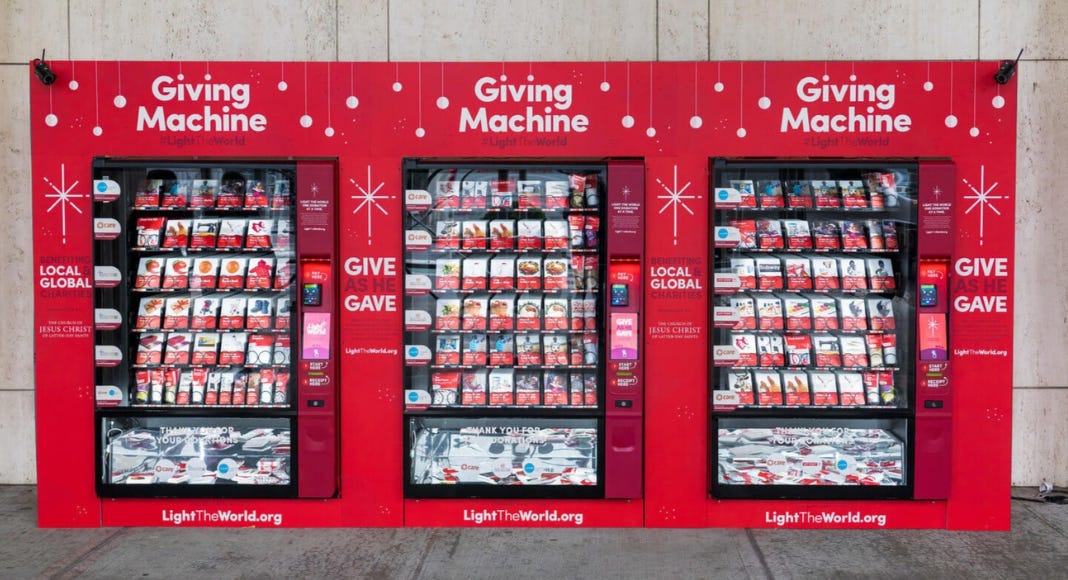
The more laps I did, the more of it I absorbed. Free cookies were being handed out. Someone was playing the flute. Not background music from a speaker, an actual person with a flute, performing live while people waited their turn. The lighting was warm. The mood was gentle. Everything about it felt curated, like the environment itself was part of the pitch.
And then there were the machines. Big, glowing vending machine style kiosks with touch screens offering what looked like charitable purchases. Meals for children. School kits. Hygiene supplies. Clean water access. Medical visits. Emergency care. Livestock for families.
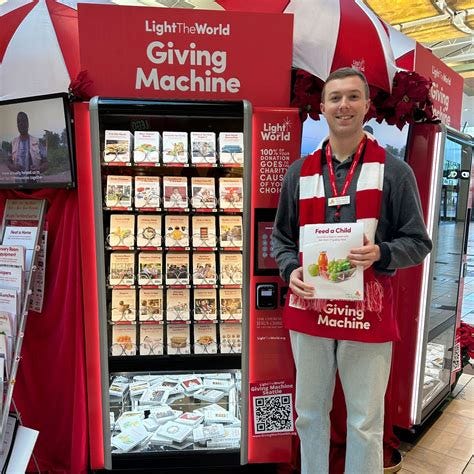
Not framed as donations per say, but as items you could select and buy, like you were ordering goodness off a menu. Swipe your card. Read the message about how many lives you just helped. Step aside.
I wasn’t in line. I was just walking laps, circling past the machines, and the more I watched, the more it felt like a grotesque little ritual. People moved through the kiosks with the same automatic, soft smiles, the same careful gestures, as if they had been silently coached on how to look and feel while performing their good deed. Tap, swipe, accept the brief digital affirmation, step aside, repeat. It was hypnotic and hollow. Watching it, I could not shake the feeling that they were buying their way into heaven, paying for the sensation of virtue as if it were a product on a menu.

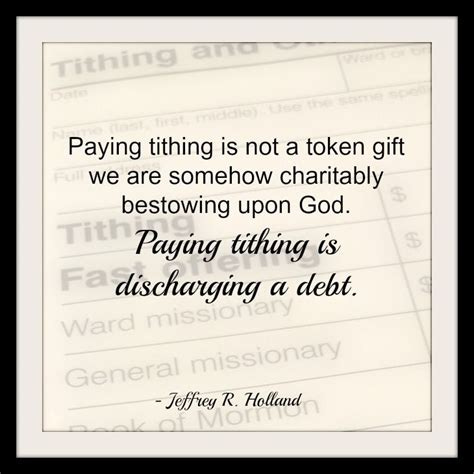
I live in a heavily Mormon populated area, so part of me immediately guessed whose idea this was. And that made it even stranger. If it really was the church behind it, the ten percent they already collect from members should cover any moral dues, right?


At first, I had no idea who was behind this thing, and honestly that made it even weirder. The whole setup had this weird combination of corporate polish and religious undertone, like someone had studied human psychology and figured out exactly how to make people feel good about themselves while keeping them moving through a controlled path. The machines glowed, the music played, volunteers smiled like they were reading off a script, and everyone around me seemed hypnotized, tapping and swiping without a second thought.

It felt like watching a mass social experiment in slow motion, people buying instant moral validation without realizing they were participating in something entirely designed to make them feel righteous. I kept circling, trying to figure out what kind of organization would go to such lengths, because whoever it was clearly had the resources to make this spectacle as mesmerizing and obediently performed as possible.

Eventually curiosity turned into irritation, and when I got home I looked it up. It was run by the Church of Jesus Christ of Latter day Saints (that’s right, Mormons). That detail changed everything.
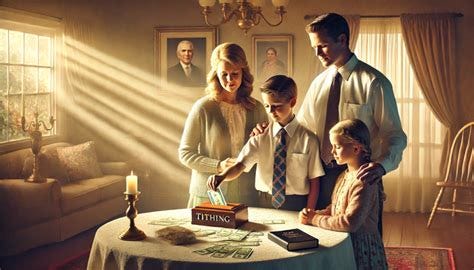
These machines were doing nothing the institution could not already handle quietly and permanently. That part made me angry, seeing it as an adult after growing up in a Mormon household where ten percent of whatever anyone earned was supposed to go straight to the church. You paid your tithing, or you didn’t get the benefits of being a “good Mormon.” No baptism, no temple weddings, no eternal family blessings, no standing in good conscience at church rituals. Your spiritual access was conditional, measured, and tracked, and missing a payment wasn’t just a financial choice. It was a moral strike against you in the eyes of the institution.
And yet here they were, in a mall, building a shiny, overproduced spectacle where anyone could pay for a moment of virtue, swipe their card, and leave feeling righteous. You didn’t have to commit anything serious, no covenant, no permanent devotion, no accountability beyond the price of a small token. People seem hypnotized by the ritual, fully absorbed in performing goodness without ever really seeming to question where the money actually goes.

They smiled, they tapped, they swiped, they walked away convinced they had done something meaningful, while the machine itself, the idea, the optics, and the feeling of morality continued to hum along untouched, entirely separate from real impact or consequence.

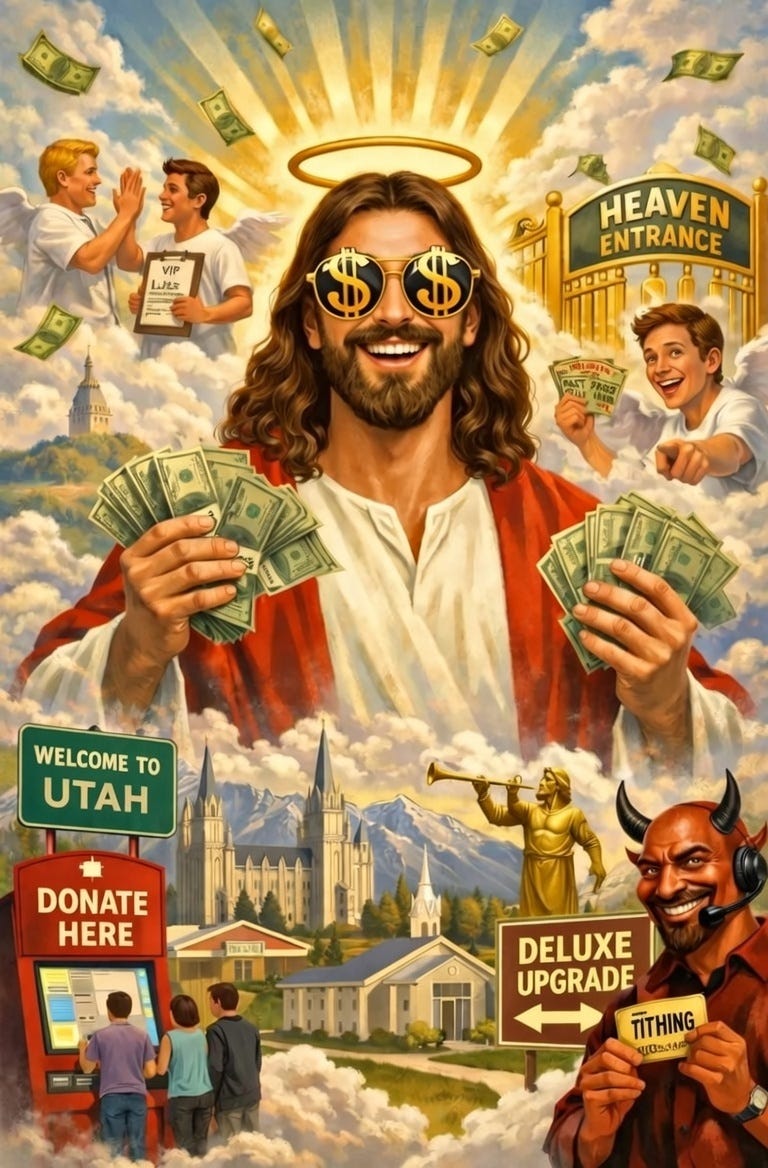
This is not a church operating on thin margins. Its investment arm, Ensign Peak Advisors, has been exposed through whistleblowers and regulatory action as controlling billions of dollars, with credible reporting placing its assets well over one hundred billion. That information only became public after years of deliberate financial opacity and the use of multiple entities to conceal the true size of the portfolio, a strategy that later resulted in an SEC settlement.
So the question became unavoidable. Why does an institution with that level of wealth need to stage charity in a shopping mall. Why ask ordinary people to buy symbolic meals, school supplies, or livestock from glowing machines when the resources to fund real aid already exist in staggering abundance. The answer is not that they need the money. It feels like they need the performance. And the campaign is dripping in emotional rhetoric that pulls at the heart strings…for your money.
Light the World is not some old religious tradition. It launched in 2017 as a modern global campaign, polished and scalable. The language is intentional. Light. Giving. World. It signals moral clarity while staying vague enough to discourage scrutiny. It frames the institution as benevolent and outward focused while quietly drawing attention away from its financial power and long term accumulation. (Matthew Holland ex-president of Utah Valley University where Charlie Kirk was supposedly shot is even a part of this).
The partnerships reinforce that framing. Large international aid organizations. Global health initiatives. Familiar names from the same “philanthropic” ecosystem where corporate capital, policy influence, and moral authority blend seamlessly. Vaccine related programs through UNICEF (think Bill Gates).
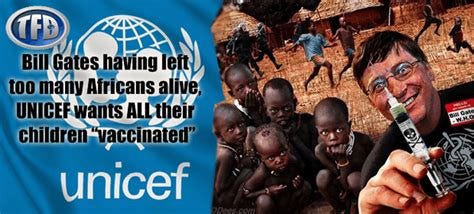
Public health campaigns. Whether someone supports these efforts or not, the overlap between investment interests, institutional influence, and humanitarian branding is impossible to miss.
The Church of Jesus Christ of Latter-day Saints
A partner since 2013
For over a decade, UNICEF and The Church of Jesus Christ of Latter-day Saints have worked together to improve the health and well-being of the most vulnerable children and mothers around the world. By providing critical support and resources, we are helping ensure every mother and child is protected and healthy and can thrive.
Our long-standing collaboration has created sustainable impact for millions of children and families through UNICEF programmes focused on health, education, nutrition and emergencies.
Programme Spotlight
In response to the devastating refugee crisis in Sudan, we co-created the Learning for Life programme, a multi-year initiative to provide early childhood education to children living in refugee camps in the Democratic Republic of the Congo, Kenya, Sudan, and Uganda.
Committed Support for Mothers and Children
UNICEF and The Church of Jesus Christ of Latter-day Saints are committed to caring for the most vulnerable children and mothers, with meaningful programming and long-lasting impact.
Since 2013, we have also helped provide measles and polio vaccines, supported the efforts to eliminate maternal and neonatal tetanus, provided aid to children on the move, responded to the COVID-19 pandemic, supported the early prevention, detection and treatment of acute malnutrition, and strengthened health systems to provide children and mothers with improved access to resilient and inclusive health care.
Thanks to generous contributions from Church members, our collaboration is supporting programmes for mothers and children in 30 countries and counting. UNICEF also works with local Church Area Offices around the world to scale up in communities for sustained impact.
Lighting the World for every child
Every year in November and December, Light the World Giving Machines appear in cities worldwide offering supporters the opportunity to purchase a gift during the holiday season that gives back to mothers and children worldwide.
The red vending machines are sponsored by The Church of Jesus Christ of Latter-day Saints and 100% of proceeds go to participating organizations. This year, supporters can purchase UNICEF items including vaccines to help save lives, Ready-to-Use Therapeutic Food (RUTF) to combat malnutrition, Baby Resuscitation Kits to ensure child survival, and more items to help mothers and children everywhere.
In 2025, Giving Machines can be found in over 25 locations:
Australia:
Adelaide
Canberra
Hobart
Melbourne
Sydney
Canada:
Calgary
Lethbridge
Montreal
Vancouver
Victoria
Italy:
Rome
New Zealand:
Christchurch
United States of America:
Prescott, Arizona
Show Low, Arizona
Snowflake, Arizona
Anaheim, California
Huntington Beach, California
Long Beach, California
San Clemente, California
New York City, New York
St. George, Utah
Ogden, Utah
Cache Valley (Logan), Utah
Bellevue, Washington
Seattle, Washington
Supporters can also make donations online to spread joy and light with gifts that deliver meaningful impact to families globally.
To date, UNICEF has raised over $2 million through Light the World donations from Church members and supporters. UNICEF operates the world’s largest humanitarian warehouse and uses these donations to distribute supplies where they are needed most.
The phrase Light the World keeps echoing in my head, and the more I sit with it, the more it grates. It feels hollow when placed alongside the long list of scandals tied to powerful institutions that present themselves as moral authorities. The Mormon Church’s history of sexual abuse cases, financial secrecy, and questionable use of member donations sits uneasily behind polished campaigns and inspirational slogans.
The same discomfort follows organizations like UNICEF, whose public image of humanitarian virtue has been repeatedly complicated by vaccine controversies, funding entanglements, and governance scandals.
When these patterns are viewed together, the slogan stops sounding aspirational and starts sounding like branding designed to distract. Instead of illuminating the world, it feels like a way to wash over institutional harm and esoteric weirdness with a soft “glow” of righteousness, asking for trust without accountability.
“Light the World” dominates the Christmas season in social media feeds, church campaigns, and press releases, and at first glance it appears benign, even inspiring, but once you examine the phrase in historical, symbolic, and institutional context it becomes deeply unsettling.

The slogan is deployed at a time of year already layered with ancient pagan symbolism, a date that aligns with winter solstice celebrations long predating Christianity and associated with the rebirth of the sun, Saturnalia, and Sol Invictus.

Scholars and many others widely acknowledge that December twenty fifth has no verifiable connection to the historical birth of Jesus, and its alignment with solar mythology adds a strange resonance when organizations insist they are bringing light to the world during what was always a festival of illumination and rebirth.
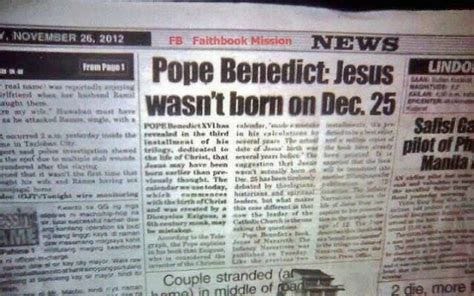
The very choice of timing is deliberate, signaling that light is not a natural phenomenon but a product that is distributed and controlled by human institutions.

The parallels with President Bush’s thousand points of light rhetoric are obvious and alarming. Speeches, delivered repeatedly during the 1988 Republican National Convention and his 1989 inaugural address, presented light as a moral force to be distributed by the elite, emphasizing volunteerism while subtly redirecting authority from public governance into private, elite-controlled networks.
The Points of Light Foundation institutionalized this ideology.
We can find meaning and reward by serving some higher purpose than ourselves, a shining purpose, the illumination of a Thousand Points of Light… We all have something to give. “— President George H.W. Bush, Founder of Points of Light
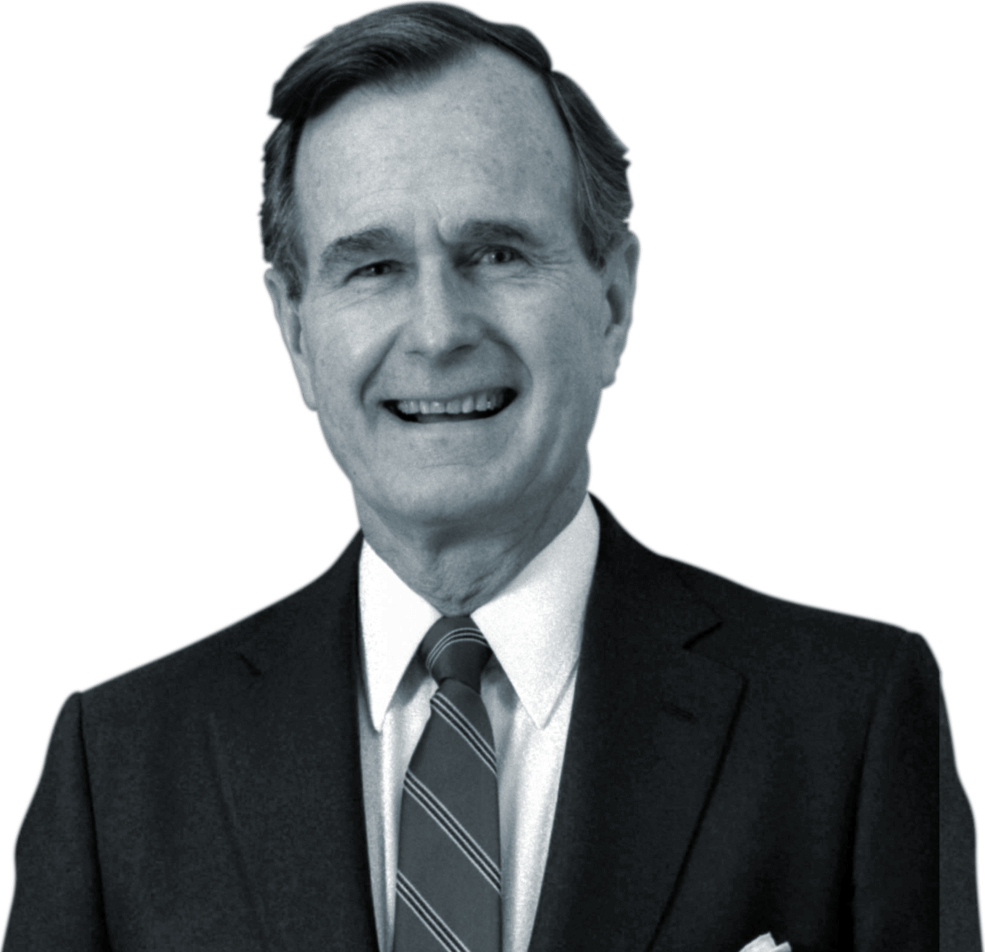
Transforming light into a tool of influence that rewards compliance and obedience while obscuring structural power dynamics, creating the illusion of virtue while consolidating control over what society perceives as moral action.
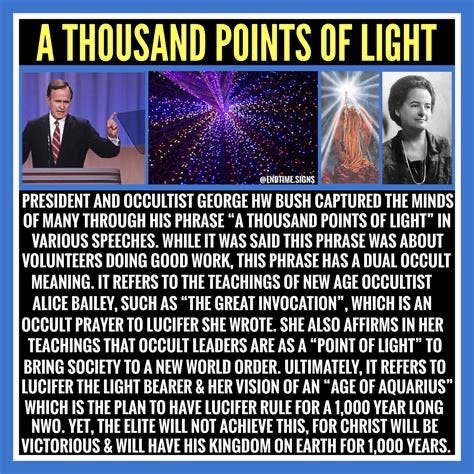
The same framework is mirrored in the Mormon Church’s Light the World campaign, which encourages mass participation and symbolic gestures of kindness while minimizing accountability, silencing dissent, and masking the church’s long documented history of financial opacity, coercive tithing practices, and abuse scandals. The timing, symbolism, and ritualization of these campaigns is eerily similar, suggesting a deliberate harnessing of ancient archetypes of illumination to manipulate public perception.
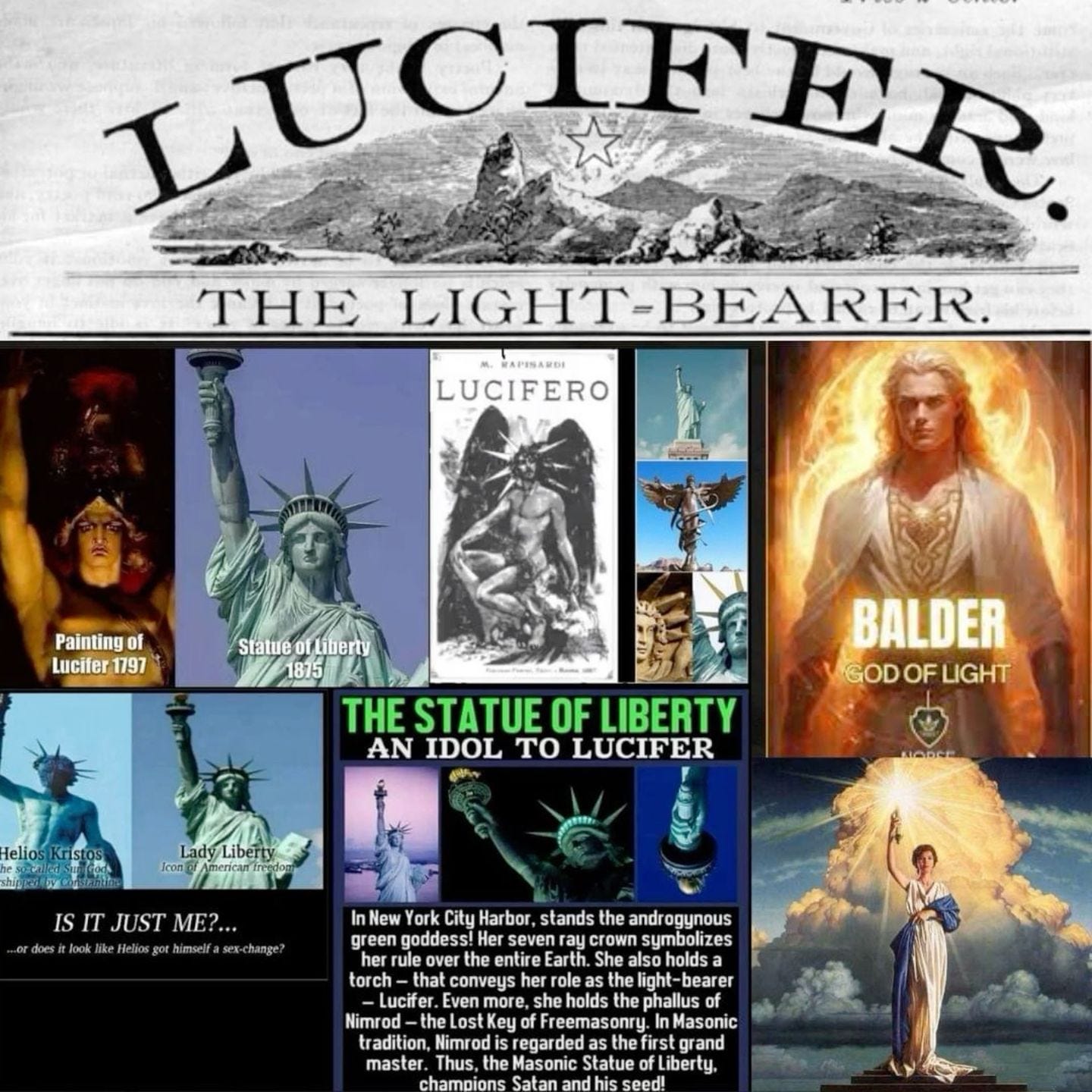
This pattern is not new. The late nineteenth century Theosophical journal Lucifer, The Light Bearer, published between 1897 and 1906, reclaimed the term Lucifer from its theological demonization, emphasizing instead the Latin meaning of the word as the morning star or light bringer.
The editors stated openly that the journal’s mission was to bring illumination to minds deliberately kept in darkness by dogma, to awaken understanding in those capable of supposedly grasping truths too dangerous or complex for ordinary instruction. The magazine framed knowledge as power and enlightenment as elite privilege, making it explicit that light is never universally distributed but given selectively, and that illumination always carries a cost in terms of independence and obedience. This was not folk religion or casual speculation; it was an ideological project, a claim to intellectual authority that positioned its readership as arbiters of hidden truths while others remained in shadow.
![General Albert Pike, 33° Freemason Morals and Dogma [p. 321] | Albert pike, Son of the morning ...](https://substackcdn.com/image/fetch/$s_!FJYm!,f_auto,q_auto:good,fl_progressive:steep/https%3A%2F%2Fsubstack-post-media.s3.amazonaws.com%2Fpublic%2Fimages%2F3f22f5d3-b2ff-42d8-9146-26f59e7a4adc_474x266.jpeg "General Albert Pike, 33° Freemason Morals and Dogma [p. 321] | Albert pike, Son of the morning ...")
When modern institutions repeat the rhetoric of light during highly symbolic seasons, they are invoking this same esoteric heritage while obscuring its origins. Churches and global organizations alike saturate public attention with visual and textual signals of goodness, charity, and illumination while protecting hierarchical structures that concentrate power and obscure harm. Light becomes a metaphor for moral authority rather than actual accountability. It signals compliance rather than enlightenment and masks systemic dysfunction behind curated optics. The very rhetoric of illumination carries with it centuries of association with selective access to knowledge, elite privilege, and the control of perception.
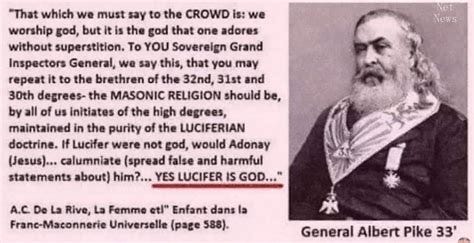
The juxtaposition of Bush’s thousand points of light, Mormon Light the World campaigns, and the historical Lucifer, The Light Bearer illustrates a continuous pattern in which elites harness symbolic illumination to consolidate authority, dictate moral narratives, and control what the masses perceive as virtue. Light is promised, yet it is never unconditional, and it is always accompanied by a system of hierarchy and restriction. This is why such campaigns feel hollow to anyone paying attention. Theirs is a light that dazzles while it blinds, reveals while it conceals, and seduces while it restrains critical inquiry. Real illumination does not need slogans, curated volunteer campaigns, or seasonal branding. It is never about perception; it is about accountability, exposure, and the unflinching revelation of what lies in the shadows.
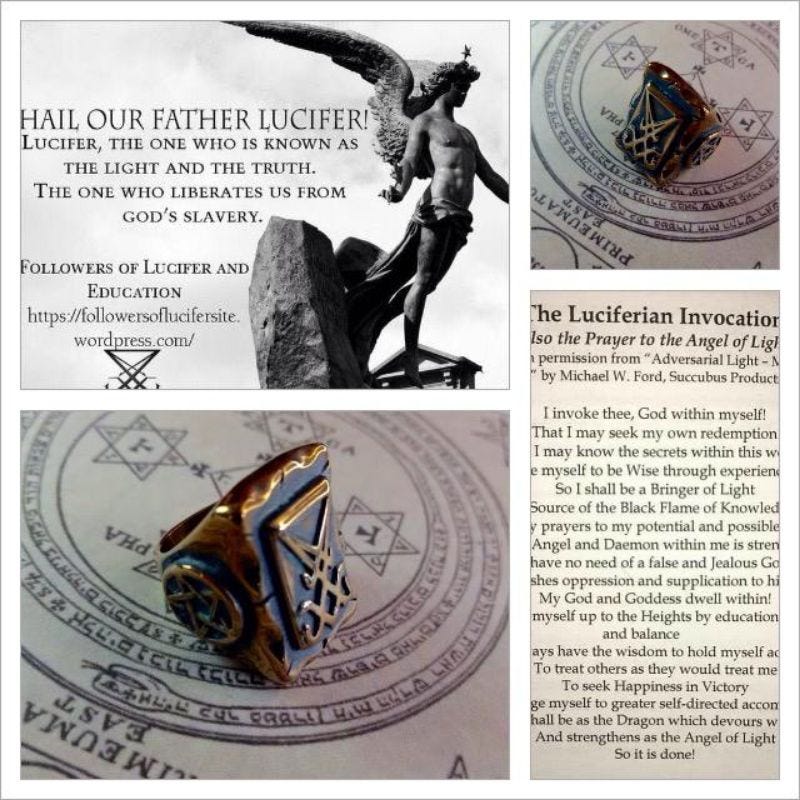
“Light the World”, therefore, does not really fell much like an expression of moral good, but a signal of authority that seeks to shape consent, sanitize institutional power, and control the optics of virtue. Those who obsessively claim to distribute light are often the ones most invested in concealing the darkness. When these institutions insist on framing themselves as the light during a season historically devoted to illumination, the act is not benevolent; it is deliberate, manipulative, and deeply esoteric. History suggests that those who announce themselves as the light are rarely doing so to reveal truth, and that the shadows they leave in their wake are precisely what they hope will remain unseen.

If someone wants to help other people all they need do is walk out the front door and locate the elderly neighbor next door who needs their porch light bulb replaced or could use some nutritious food made from whole ingredients or, for the more adventurous, all communities great and small have homeless encampments that could use blankets and more. There are animal shelters that could use old towels and blankets. A bag of pet food. Etc....etc...etc.
What you have beautifully illustrated is this - people don't REALLY want to help. They are selfish beings who want to feel good about themselves. Period.
It's no wonder the Mormon's are likely exploiting that desire for self-glorification. Easy-peasy.
One hundred and fifty years ago Charles Spurgeon, the Christian minister and writer, saw this apex of avoidance of actually helping others already epidemic in American Christian Churches in his own time. He wrote - The downfall of organized Christianity will be in the avoidance of helping those who ask for help. He said the churches used to be the center of any community or neighborhood and if someone needed help of any sort, the church was the first place they turned to because the unfortunate knew the churches would always give them help.
He saw the increasing tendency to foist the needy on state or federal governments, because the churches were not "equipped" to deal with the dire effects of poverty, as a sin that would eventually render most churches as dead institutions where people only go to make themselves feel better, not to serve others as Jesus commanded.
And there you have it.
My brother who was a both a convicted Mormon and child molester once smugly told me, post child abuse conviction, that because I am not a Mormon I can never have a covenant with God.
I confess I was relieved that whatever god my brother believed himself to be in covenant with would not seek me out for the same. Thank God Almighty.
Mormons, like other cults who have fallen from God such as the Zionists, always justify their fleecing of those outside the cult. It's seems to be a "tenet" of their beliefs.
Thank you for pointing all this out. Great article and possibly the best cautionary XMas story I've ever read.
I pity the poor fools who obviously know not what they do when pressing the buttons and swiping the cards at the giving machines. Lord a mercy.
Thank you, Jesus. God Bless.
That was such an excellent article. It was packed with information. Thank you so much. As far as I know, Mormon believe that Jesus is a brother of Satan. Mormonism is NOT Christianity. Mormonism is so deceptive. I have been reading about how Joseph Smith who was a Freemason based a lot of his made-up Mormon teachings on Freemasonry.