The Paradise Papers exploded into public view on November 5, 2017, when over 13.4 million confidential files from offshore law firms and tax haven registries were published by Süddeutsche Zeitung and the International Consortium of Investigative Journalists. They exposed decades of secret financial arrangements involving more than 120,000 individuals and corporations. Politicians, royalty, corporate giants, banks, celebrities, and financiers all appeared in the files, yet nearly a decade later the identity of the leaker remains unknown. That silence is deliberate. Exposing the offshore world threatens entrenched power, and those in control protect themselves ruthlessly.
The Paradise Papers were just one part of a broader chain of investigations that revealed a persistent, global offshore ecosystem. In 2013, the Offshore Leaks first disclosed more than 130,000 accounts, trusts, and companies used by politicians, billionaires, and arms dealers to move wealth through secrecy jurisdictions.
The Panama Papers in April 2016 followed with over 214,000 entities linked to Mossack Fonseca, implicating heads of state, royal families, international banks, and multinational corporations.
That same year, the Bahamas Leaks uncovered another 175,000 offshore companies connected to global elites and corporate power players. The Paradise Papers followed in November 2017, exposing Apple, Nike, Facebook, Twitter, Uber, Glencore, and Goldman Sachs, along with figures like Queen Elizabeth II and Jeffrey Epstein.
The Pandora Papers in October 2021 revealed nearly 810,000 offshore companies, foundations, and trusts across 90 countries, showing that these networks had not only persisted but expanded, intertwining personal wealth, corporate strategy, and political influence.
The Sassoon family exemplifies the continuity and endurance of these networks. Starting in India and China, they built massive trading empires and helped fund early banks that eventually evolved into HSBC. Generations later, Sassoon trusts and family members appear in offshore filings, demonstrating how dynastic wealth, aristocratic networks, and modern offshore structures intersect.
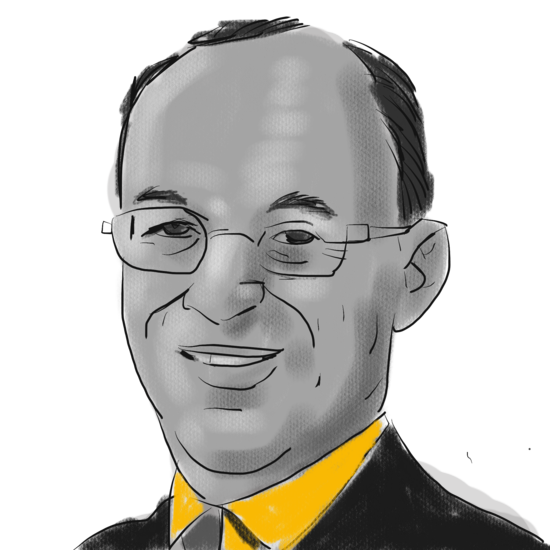
James Meyer Sassoon, a business executive and politician, served as the U.K. Treasury’s commercial secretary from 2010 to 2013, overseeing economic productivity and industrial strategy, and as president of the U.K. Financial Action Task Force, responsible for combating money laundering and terrorism financing. Sassoon has been a defender of legal tax avoidance, saying that minimizing “tax payments is perfectly reasonable.”
In the data
Leaked documents from Appleby show that Sassoon and several family members have been beneficiaries of a Cayman Island trust fund called the DCR Herschorn Settlement, established by Sassoon’s grandmother decades ago. Information from the files indicate that it was originally operating under Bahamian law. Documents state that the trust owns Orchard Limited, an investment holding company listed as residing in the Bahamas. In 2002, Orchard held $124 million, according to financial statements. By April 2007, its holdings had nearly doubled to $236 million, and that year, Orchard distributed $8 million to beneficiaries, according to the records.
By 2002, the trust had retained the global accounting firm Deloitte to advise it on tax matters. A 2008 fax from James Sassoon’s father, Hugh, to an Appleby administrator showed that Deloitte warned that U.K. taxpayers could be liable for U.K. taxes on more than $14 million of the trust’s funds in the case of a withdrawal. Hugh Sassoon also told the Appleby representative that he was forwarding the tax memo to two Orchard Limited administrators and that “no doubt you will discuss it with them.”
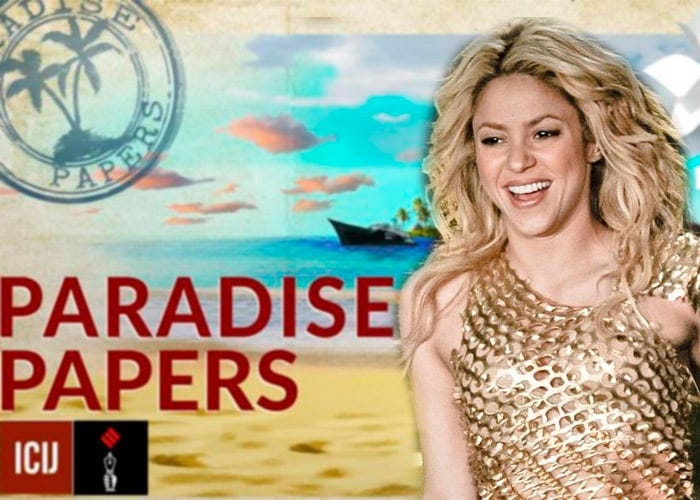
Other billionaires, corporate executives, and celebrities such as Sheldon Adelson, Carl Icahn, Robert Mercer, Stephen Schwarzman, Paul Singer, Bono, Shakira, and Amitabh Bachchan also appear, highlighting the global reach of these structures. The Paradise Papers and related leaks show that offshore finance is not about isolated scandals. It is a system that has grown, adapted, and survived across decades, continents, and crises.
The COVID‑19 pandemic further highlighted the resilience of these networks. Ted Turner’s name does not appear in the Paradise Papers, yet he was a prominent early supporter of the COVID‑19 Solidarity Response Fund, launched in March 2020 by the United Nations Foundation and the World Health Organization.
Turner’s backing lent credibility at a moment of global panic, yet public accounting of total contributions, major donors, and allocation is still questionable. At the same time, UN agencies worked directly with national governments, including Mauritius, to implement localized pandemic response plans. The Mauritius COVID‑19 Socioeconomic Response Plan references support through a COVID Solidarity Fund as part of broader health and recovery efforts.
The overlap between jurisdictions exposed in the Paradise Papers and pandemic-era financial structures is striking. Places like Mauritius had already been documented as a hub for routing capital through opaque yet compliant structures, and during the pandemic it became a focal point for emergency funding and international cooperation. This raises questions that remain largely unanswered. Was Mauritius and other places like it used as a conduit for moving significant sums of money during COVID‑19? Who ultimately controlled the financial pipelines, and what oversight existed when urgency replaced scrutiny? The convergence of elite finance, crisis philanthropy, and global governance highlights how wealth moves quickly and quietly through systems most people barely see.
Offshore leaks do more than expose individuals. They document a persistent global system in which jurisdictions like Mauritius, Bermuda, the Cayman Islands, Panama, and the Bahamas repeatedly appear as centers of financial power and secrecy. Companies, dynasties, and elite families reappear across different leaks, showing that offshore finance is a structural feature of modern capitalism. By the time the pandemic struck, these networks were fully operational, meaning capital could flow uninterrupted even as the world faced unprecedented economic disruption. These revelations force us to confront uncomfortable truths about transparency, power, and control, and how public crisis response can coincide with financial secrecy on a global scale.
The Paradise Papers and related offshore leak databases can still be searched online through the ICIJ’s Offshore Leaks Database, allowing anyone to explore millions of corporate, trust, and foundation records connected to politicians, billionaires, corporations, and other global elites.
The Paradise Papers, together with the Panama Papers, Bahamas Leaks, Offshore Leaks, Pandora Papers, and more, provide a roadmap of modern global wealth: an intricate, enduring, and largely invisible architecture. Jurisdictions like Mauritius, Bermuda, and the Cayman Islands repeatedly appear, the same family dynasties resurface, and the same corporate giants exploit these structures. From the Sassoons’ early empires to 21st-century billionaires, the offshore world has survived, adapted, and thrived, leaving the public to confront the uncomfortable reality of how wealth, secrecy, and influence intersect at a planetary scale.
Thanks Betty, very enlightening and thoroughly documented.
The blood lines and their flunkies on the gravy train. On the downside the evil never seems to die but on the upside their dirty deeds are not going unnoticed anymore.
It seems to be all about stealing the common-wealth and then laundering the money.
I wonder where they parked the trillions that shell companies like Pfizer embezzled around the world for billions of toxxine orders which never got filled? Mauritius?
golly, tax havens 'n offshore invest-mints... an' quite the varied an' multi-national/international list--amused by all the entertainers 'n pop-stars (!)...


Thanks Betty, very enlightening and thoroughly documented.
The blood lines and their flunkies on the gravy train. On the downside the evil never seems to die but on the upside their dirty deeds are not going unnoticed anymore.
It seems to be all about stealing the common-wealth and then laundering the money.
I wonder where they parked the trillions that shell companies like Pfizer embezzled around the world for billions of toxxine orders which never got filled? Mauritius?
golly, tax havens 'n offshore invest-mints... an' quite the varied an' multi-national/international list--amused by all the entertainers 'n pop-stars (!)...
https://en.wikipedia.org/wiki/List_of_people_and_organisations_named_in_the_Paradise_Papers?
Eddie MONEY (cain't make it up lol...) knew 'bout 2 Tickets to Paradise...
as they say... fer love or...money!
https://www.youtube.com/watch?v=JxcUmAVG3RQ