
The Hidden Electrical Storm Inside the AstraZeneca Vaccine
Charged Particles

There’s a lot of confusion about what’s actually in the AstraZeneca COVID vaccine and how it behaves once it enters the body. On paper, the ingredient list seems simple. It supposedly contains a chimpanzee adenovirus vector and a handful of stabilizers, including polysorbate 80. Officially, regulators say the vaccine has “no adjuvant,” and most people stop there. The truth is far more complex, and the real story starts with that little molecule, polysorbate 80.
Polysorbate 80 is a surfactant. In “water” it does not just float around politely. It forms micelles. These tiny spherical structures have a hydrophobic core and a hydrophilic surface. The surface carries a charge. Once the vaccine is in the bloodstream, these micelles can attach to the supposed viral antigen or protein fragments and coat them in a new electrical layer. This changes the particle’s zeta potential, which is the electrical potential at the particle’s surface relative to its surrounding environment. Altered zeta potential affects aggregation, movement through tissue, adhesion to cells, and interactions with blood vessels and immune structures. Particles that would normally drift harmlessly can suddenly stick to endothelial surfaces, interact with platelets, or cross membranes in ways the body is not expecting. This is the kind of bioelectric shift that could explain some of the serious reactions seen after vaccination.
The AstraZeneca vaccine also contains what is labeled as a chimpanzee adenovirus vector. If this were truly present, it would act as a foreign protein particle in the body. These proteins carry charge and can interact with tissues, fluids, and cells in ways that alter local and systemic bioelectric properties. Changes in zeta potential, pKa, and cellular adhesion could occur wherever the particles travel, from muscle tissue to lymph nodes and eventually the bloodstream. As my brilliant reader pointed out, whom I greatly appreciate, Charles Richet’s work showed that repeated injections of foreign proteins can produce increasingly severe reactions over time. This is not necessarily an immune reaction. Think of it like antibiotics: they are foreign chemical agents that disrupt the gut microbiome and overall internal ecology. The bacteria that emerge in these situations are often labeled “pathogenic,” but from a terrain perspective they are not inherently harmful; they appear because the internal environment has already been altered. The disruption comes first, and the bacterial changes follow. Injecting charge-altering foreign proteins could produce a similar destabilization, but potentially more rapidly and systemically than oral antibiotics because the proteins bypass the digestive tract and reach tissues, blood, and organs directly. Repeated exposures could compound these effects, accelerating bioelectric disturbances and systemic dysregulation in ways we do not fully understand.
Zeta potential is often misunderstood as something that only matters in liquids, like how particles behave in suspension. In reality, it is the electrical potential at the surface of any particle relative to its surrounding medium, and that medium could be a solid, a liquid, or even a gas. This means that wherever a particle encounters a different environment, whether it is tissue, lymph, blood plasma, or even air, the particle’s surface charge relative to that environment will influence how it interacts. Zeta potential controls adhesion, aggregation, membrane penetration, and overall mobility. In the context of polysorbate 80 micelles or the supposed viral antigen in a vaccine, changes in surface charge can affect not just stability in fluid but also how particles stick to cells, travel through tissue, or are taken up by lymph nodes. The concept is universal, not limited to colloids, and small shifts in zeta potential can produce ripple effects across multiple biological systems.
The local pH environment around micelle-coated particles can shift. This alters protonation states and the apparent pKa of nearby residues. Proteins exposed to these changes can fold differently and reveal new charged surfaces that were not part of the original design. These changes amplify interactions with the immune system, complement pathways, and coagulation cascades. Tiny bioelectric alterations can snowball into major physiological consequences in sensitive individuals.
When it comes to who received this vaccine, the AstraZeneca COVID vaccine was primarily administered to adults. Initial rollout programs in Europe, the United Kingdom, and many other countries focused on people over the age of 18, with priority given to older adults, frontline workers, and those with underlying health risks. Regulatory recommendations later adjusted age guidance depending on risk factors for clotting events. In many places, younger adults were given alternative vaccines because serious clotting risks were disproportionately observed in that demographic.
The vaccine was injected intramuscularly, most commonly into the deltoid muscle of the upper arm. The deltoid is standard for adult intramuscular injections because it is easily accessible and provides a suitable muscle mass for absorption. Once injected, the vaccine does not simply stay at the injection site. The muscular tissue acts as a temporary depot, and the duration of this depot effect can extend from hours to days and in some cases to weeks. This depends on particle size, how micelles interact with tissue, and critically, how much polysorbate 80 is present in the vial. There is no practical way to ensure that every recipient gets exactly the same concentration. From this depot, micelles and the supposed viral antigen slowly enter nearby fluid spaces, lymphatic vessels, and eventually the bloodstream. While trapped locally, the particles interact with muscle cells, extracellular matrix, and resident “immune” (the trash crew and bouncers) cells. This extended presence allows for prolonged interactions that can influence bioelectric behavior, surface charge dynamics, and uptake into lymph nodes.
The lymphatic system is a primary route for particle uptake after intramuscular injection. Lymphatic vessels drain the interstitial fluid surrounding the injection site, carrying particles toward regional lymph nodes. In the case of the deltoid, these would include axillary lymph nodes. Once in the lymph nodes, particles can encounter immune cells and be processed or sequestered. Some particles may exit the lymph nodes and enter the thoracic duct, eventually reaching systemic circulation. From there, the particles may circulate through the blood, come into contact with endothelial surfaces, platelets, or other organs, and be cleared or redistributed over time.
The systemic distribution of micelle-coated particles and the supposed viral antigen can vary. Muscle cells, lymphatic endothelial cells, and resident immune cells all interact with the particles. Polysorbate 80 micelles can affect membrane permeability and cellular uptake, potentially increasing the efficiency with which particles are taken up by phagocytic cells. Over time, as the depot effect diminishes and more particles enter systemic circulation, there is the potential for interactions with sensitive vascular beds, platelet populations, and the complement system, which can amplify inflammatory or coagulation responses.
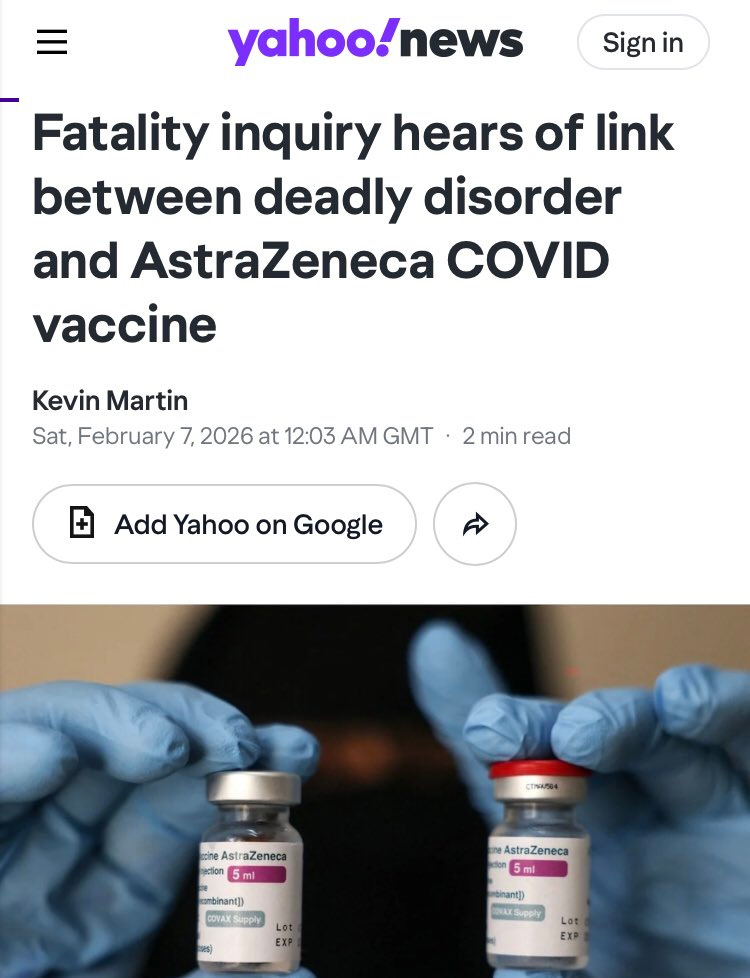
The AstraZeneca COVID vaccine caused serious health problems in a large portion of recipients. Blood clots, often accompanied by low platelet counts, were reported in numerous people after vaccination. Some of these cases were fatal. Other serious conditions, including immune thrombocytopenia and Guillain‑Barré syndrome, were also documented following vaccination. People experienced neurological symptoms, clotting events, and severe immune reactions. These were real events observed in real-world use and recorded by health authorities. Because of these side effects, multiple countries temporarily suspended or restricted the use of this vaccine during its rollout. Some nations limited it to older adults because risk patterns varied with age and sex. Although the vaccine was not universally banned for safety, it was withdrawn from production and marketing when newer vaccines became available and global demand dropped. Regulatory reviews confirmed that serious clotting and immune-related events were linked to the vaccine. The fact that these reactions occurred led to restrictions and eventual discontinuation of its use in many regions.
Calling the vaccine “adjuvant-free” is technically true but misleading. Polysorbate 80 is not a classical aluminum or saponin adjuvant. It is far from inert. Its ability to form micelles fundamentally changes the bioelectric properties of the supposed viral antigen and protein fragments. This creates a cocktail of charged, reactive particles in the bloodstream. These interactions with blood vessels, immune cells, and proteins can, in rare cases, overwhelm physiological control systems and produce serious or fatal outcomes. What looks simple on the ingredient list is in reality a dynamic and electrically active system. It rewrites the rules of how foreign particles interact with the body at the microscopic level. Understanding the journey from deltoid injection, through local depot formation that can last days to weeks, lymphatic uptake, and eventual systemic circulation is key to appreciating how even inert-seeming stabilizers can have complex and far-reaching effects once inside the body. Variability in polysorbate 80 concentration between vials and between recipients adds another layer of unpredictability to how long the depot persists and how strongly these bioelectric interactions play out.
What we are really taking for granted is that every vial contains exactly what is listed on the label. Independent analyses of vaccine vials by some researchers found that the supposed viral antigens were absent or in highly variable amounts. If that is true, then there is no real way of knowing exactly what is being injected. Regulatory approval assumes uniformity, quality control, and verification of contents, but there is evidence that this assumption is not always met. This uncertainty makes the unpredictable depot effect, bioelectric interactions, and systemic particle distribution even more concerning because what is circulating in the body may not match what is advertised.


Brilliantly explained! Yeah, I have had no jabs for nigh 50 years... Glad, too!
Also awful is the poop angle: The Oxford / AstraZeneca Covid-19 shot was a genetically modified [alleged] "virus" of a type called an adenovirus, which Oxford found originally in chimpanzee poop!!!
https://chanceandnecessity.net/2021/04/14/how-to-make-a-vaccine-from-chimp-poo-to-my-left-arm/
https://fasteddynz.substack.com/p/adam-bourla-is-a-veterinarian/comment/59722722
Any product derived from an animal has the potential danger to cause an old, already-known animal disease to "jump" from that animal to become a "new" or novel disease in human beings.
Chimpanzees most definitely can carry monkeypox, for example, as a simple Goolag search will reveal. So, thanks, but ... uh ... no thanks! Glad the damn thing was pulled off the market.